
We are seeking multiple highly motivated PhD students and postdoctoral fellows across several new projects in computational hydrology coordinated by Prof. Martyn Clark and Prof. Alain Pietroniro. These are full-time 4-year positions (PhD students) and 2-year positions (postdoctoral fellows). The focus of the work is flexible and can be tailored to suit the skills and interests of the successful candidates. Because of the computational focus of the work, a strong background in hydrological modelling, scientific software development, or high-performance computing is required. The desired qualifications and skills for PhD students and postdoctoral scholars are defined at the end of this announcement.
Broadly speaking, the work will focus on designing and implementing various water resources modelling and prediction tools, assessing and improving their performance across a range of hydrological environments using in-situ and remote sensing data, benchmarking observations from research basins, running large-domain simulations on supercomputers, and working with users to improve the value of modelling and prediction products for water resources planning and management. The successful candidates will have the opportunity to work on many different aspects of hydrological science, including cold regions processes, uncertainty quantification, isotope tracer modelling, stochastic modelling, and water quality prediction. The specific research focus will be determined based on the new hire’s skills, interests, and career/learning goals. It is expected that the new hires will present their research findings at international conferences and publish them in international journals.
Our research groups build tools to simulate and predict hydrological processes on spatial scales from hillslopes to continents and time scales from seconds to centuries. Some of our example contributions include ensemble forcing data for large-domain hydrological models, multi-scale modular hydrological models, continental-domain network routing models, ensemble methods for data assimilation, and process-based methods for model benchmarking and model evaluation. Much of our model development work is targeted toward applications in ensemble streamflow forecasting, water security assessments, diagnostic evaluations of hydrological change, water quality modelling, and improving how hydrological processes are represented in Earth System models.
We are committed to providing a safe, positive, respectful, accessible, and non-discriminatory workplace for everyone by ensuring that the Equity, Diversity, Inclusion, Accessibility culture thrives within our research teams. The following principles shape our research environment: Equity – the research environment is most effective if each team member has the opportunity for intellectual and personal growth; Diversity – the research environment is most effective if it includes people with different backgrounds, perspectives, and world views; Inclusion – the research environment is most effective where all team members trust each other, support each other, and work together closely to help each other succeed; Accessibility – the research environment supports programs, services, and products so they are accessible to people living with various abilities. We recognize that preferred scientific approaches may differ for individuals and institutions, and rigorous yet constructive dialog about such differences are both welcome and encouraged.
PhD students should have a recent MSc degree in hydrology, civil engineering, geography, environmental science, earth science, computer science, physics, or related discipline, and meet some of the following criteria:
Postdoctoral scholars should have a recent Ph.D. degree (0-3 years of postdoctoral experience) in hydrology, civil engineering, geography, environmental science, earth science, computer science, data science, physics, or related discipline, and meet some of the following criteria:
If interested in these positions, please send a cover letter explaining your interests and experience in computational hydrology, your CV, and a list of three references to David Barrett david.barrett@ucalgary.ca before 1 September 2026 with “Computational Hydrology Positions” on the subject line.
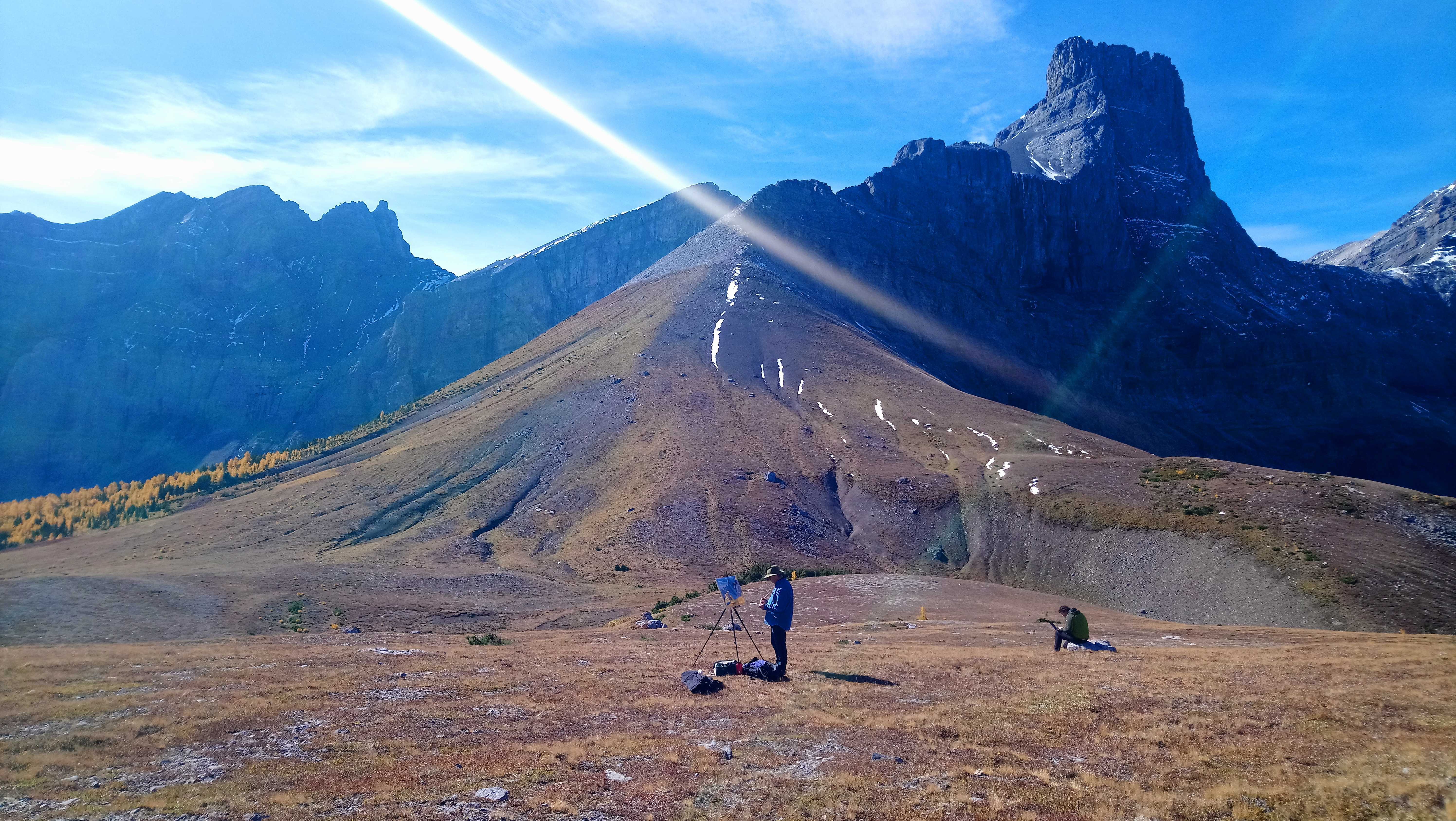
About CAPE: We bring together observations, models, and data science to improve understanding and prediction of hydrological processes across scales from hillslopes to continents.

Land and Water Acknowledgement: We respectfully acknowledge that we live and work on Treaty 7 Territory and the Homeland of the Métis, Tsuut'ina, Stoney, and Blackfoot. We thank these nations for their care and stewardship over this land and water, and we pay respect to the ancestors of these places.